 Zhcloudlink
Home / News / Will Palm-Vein Recognition Become a Mainstream Biometric?
News
Will Palm-Vein Recognition Become a Mainstream Biometric?
Palm-vein recognition is a newer biometric. High accuracy and built-in liveness detection make it useful for secure authentication. Unlike a fingerprint or a face, it reads the blood-vessel pattern inside the palm, which is hard to forge and stays stable for life.
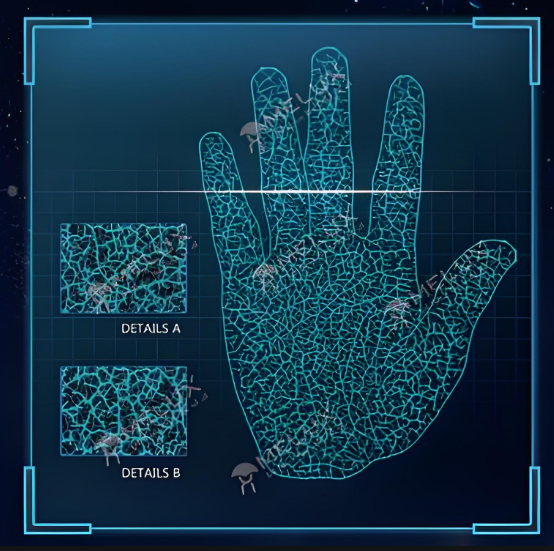
Palm-vein recognition is a newer biometric. High accuracy and built-in liveness detection give it a clear advantage in secure authentication. Unlike a fingerprint or a face, it depends on the blood-vessel pattern inside the palm. That pattern is hard to forge and stays stable for life. The method draws on optical imaging, pattern recognition, and biometrics.
1. Infrared imaging and capturing the vessel pattern
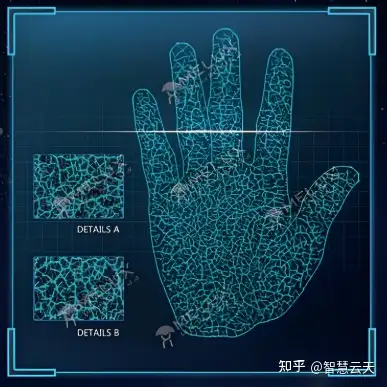
The core of a palm-vein system is an image of the veins inside the palm. That image comes from near-infrared (NIR) imaging. When NIR light at 700–1000 nm falls on the palm, hemoglobin in the blood absorbs particular wavelengths, and the surrounding tissue reflects them. Deoxygenated hemoglobin is more concentrated in the veins, so those vessels absorb differently from the tissue around them. On the sensor, the veins appear as a dark texture and the surrounding tissue as a bright region.
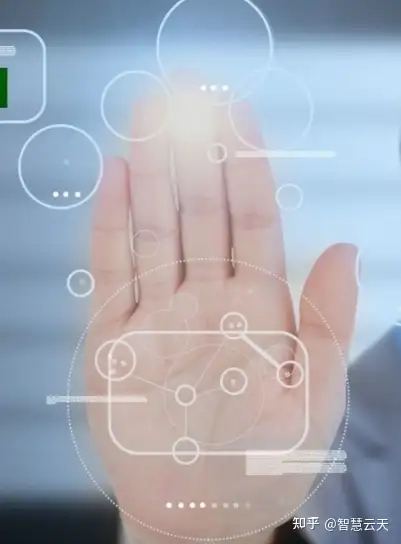
The imager usually uses a near-infrared LED array at 850 nm, a wavelength that balances hemoglobin absorption and how far the light travels into tissue. A high-resolution CMOS or CCD sensor receives the reflected light and turns it into a digital image. To keep the image usable, the system also suppresses ambient light and controls exposure automatically, so different room lighting does not break the capture.
2. Preprocessing and feature extraction
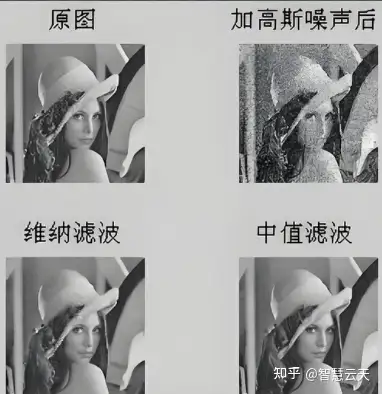
After the raw vein image is captured, the system preprocesses it to bring out the useful signal. Gaussian filtering and median filtering remove noise and raise the signal-to-noise ratio. Contrast-limited adaptive histogram equalization (CLAHE) then increases the contrast between vessels and background, so the vessel outlines are clearer.
Feature extraction combines orientation coding with texture analysis. The common algorithms are:
- Maximum curvature: track the vessel centerline from curvature extrema in the image.
- Repeated line tracking: follow the vessel path and record branch points and endpoints.
- Neural feature learning: a convolutional network learns deeper features of the vessel texture on its own.
These methods turn the palm-vein image into a feature vector: vessel width, direction, branch-point coordinates, and related data. It is usually stored as a binary template. That protects the original biometric and uses less storage.
3. Matching and the recognition decision
At recognition time, a matching algorithm compares the extracted features with enrolled templates. Similarity is usually computed in one of these ways:
- Point-pattern matching: compare the spatial layout of vessel branch points and endpoints.
- Texture matching: a bank of Gabor filters extracts oriented texture, and those features are compared.
- Deep matching: a Siamese network learns the mapping between feature vectors directly.
A dynamic threshold decides whether the match succeeds. The threshold moves with the security level and the application. To raise accuracy, many systems also fuse palm geometry, such as aspect ratio and the position of the finger roots, and authenticate with more than one modality.

4. Protection and anti-spoofing
Palm-vein recognition has a natural liveness advantage, because only flowing blood produces the vein pattern. The system looks for pulse and the small signal changes caused by blood flow, and it treats that as proof of a living subject. Photos, models, and similar fakes are rejected. Templates are stored with a non-reversible encryption algorithm, so a leaked database cannot be turned back into the original vein image.
Newer systems add multispectral imaging. Vessel absorption at different infrared wavelengths makes spoofing harder. Some high-end devices also watch blood-oxygen saturation, which gives liveness detection a second check.
High accuracy, strong anti-spoofing, and contactless use have taken palm-vein recognition into payments, access control, and medical authentication. As sensors get smaller and the algorithms improve, the technology is moving toward higher accuracy and lower cost, and it is a candidate to become a mainstream biometric.
Questions
Will palm-vein recognition become a mainstream biometric?
Palm-vein recognition is a newer biometric. High accuracy and built-in liveness detection give it a clear advantage in secure authentication. Unlike a fingerprint or a face, it depends on the blood-vessel pattern inside the body. That pattern is hard to forge and stays stable for life. The method draws on optical imaging, pattern recognition, and biometrics.
How many people can a palm-vein terminal enroll?
Depending on the hardware, a palm-vein terminal generally enrolls anywhere from 3,000 to 8,000 people.